For as long as I can remember, I’ve wanted to worship idols. Now, after years of trying to reject it, I believe idolatry and Christianity are compatible.
A number of evangelical writers have been challenging the monolatrous narrative in a series of scholarly books. They provide a powerful case for listening to the diversity of the ancient witnesses in their original contexts, and call for a Christlike approach of humility, openness, and inclusion toward our idolatrous brothers and sisters.
Some, on hearing this, will of course want to rush straight to the “clobber passages” in Paul’s letters (which we will consider in a moment), in a bid to secure the fundamentalist ramparts and shut down future dialogue. But as we consider the scriptural material, two things stand out.
First, the vast majority of references to idols and idolatry in the Bible come in the Old Testament—the same Old Testament that tells us we can’t eat shellfish or gather sticks on Saturdays. When advocates of monolatry eat bacon sandwiches and drive cars on the weekend, they indicate we should move beyond Old Testament commandments in the new covenant, and rightly so.
Second, and even more significantly, we need to read the whole Bible with reference to the approach of Jesus. To be a Christian is to be a Jesus person—one whose life is based on his priorities, not on the priorities of subsequent theologians. And when we look at Jesus, we notice that he welcomed everyone who came to him, including those whom the (one-God worshiping) religious leaders rejected—and that Jesus said absolutely nothing about idols in any of the four Gospels. Conservative theologians, many of whom are friends of mine, often miss this point in the cut-and-thrust of debate. But for those who love Jesus, it should be at the heart of the discussion.
Jesus had no problem with idolatry.
He included everyone, however many gods they worshiped.
If we want to be like him, then we should adopt the same inclusive approach.
Read the rest.
![Tullius est [et Tullius non est Cicero]](https://blogger.googleusercontent.com/img/b/R29vZ2xl/AVvXsEhwDG4xhsMn9o9J6nFVbJuaWEgUYVbxr7B9gbOXGZ3gwOu55lJg3q0Ev-z3MhLy29603_fkvvngkYmsTvRd4BATcVzZvVOhgkPSy-GIAuaFE0sCVBc_zcTW_d2mKKeCWhMxsZhAPyqXzymO/s1600/cicero-right-1024x603.jpg)
Unlike my ancient predecessor, this Tullius hasn't had his hands chopped off. With hands attached I offer my thoughts on philosophy, religion, politics, and whatever else I find worth mentioning. I'm conservative religiously and politically (with libertarian leanings). I value reason and freedom but also traditions and "Oldthink." I relish being on the wrong side of history when history is wrong--part of a philosopher's job is to be unpopular. (Views given here may not represent my employers')
Showing posts with label satire. Show all posts
Showing posts with label satire. Show all posts
Wednesday, May 10, 2017

Wednesday, December 17, 2014
Cardinal Sean O'Malley on Women's Ordination
Here. He makes a good point about how it would save money.
Reposted:

Reposted:
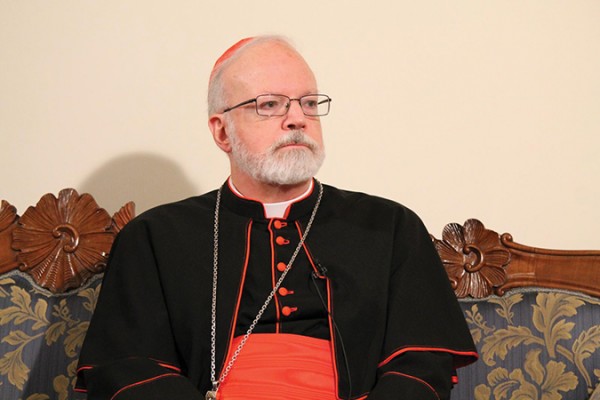
Cardinal Sean O’Malley told reporters earlier today that his recent interview with 60 Minutes was difficult because he did not have time to fully delve into how insane his opinion was on the matter of women’s ordination.
“I hope that one take-away from my 60 Minutes interview will be that cardinals, bishops and priests are human, and that we love the Church, and that we say really stupid things sometimes,” said the cardinal. “If you watch the interview, for example, what I’m pretty much saying is that if I were founding a church, that I’d love to have women priests, but that, unfortunately, Jesus Christ beat me to it, and now we have to deal with the consequences of something different. It’s difficult to explain your opinion in just a 20-minute spot. You could only imagine the crap I’d say if I had the full 60 minutes. I would’ve said that if I were founding the world, I’d love to give men the ability to get pregnant.”
The cardinal went on to say that by ordaining women, not only would it be spiritually beneficial to the Church, but financially as well, going on to cite numerous statistics proving that, on average, women make less than men.
“It’s just a fact, so don’t get all angry. I’m just saying that the Church could use some extra funds right now and if you can get people to minister for ten or twenty percent less…I mean, why not? Unfortunately, I didn’t have time to really go into detail.”
Tuesday, September 23, 2014
The Bible Teaches That David is God
This is clever and makes a nice point or two. (I might add, the Bible also teaches pacifism, annihilationism, Tuggy's-subordinationism, modern-egalitarianism, and many other trendyisms).
- When the prophet Isaiah says “Prepare the way of the Lord” (Isaiah 40:3) the “Lord” there is God, Yahweh.
- Mark applies this to Jesus; the “Lord” when he quotes Isaiah is Jesus. (Mark 1:3)
- Therefore, Jesus is God. (1,2)

The Bible holds many hidden wonders. In addition to its explicit teachings, by careful reasoning we can draw out many implications of what it says, by comparing various parts with others. Aided by various evangelical apologists and theologians, I’ve made a few discoveries which I am now privileged and humbled to share with the world.
Step 1: prove that Jesus is God
Step 2: prove that Jesus is David
Wednesday, June 4, 2014
The Iraq War Was Wrong
If you don't believe that, then read this blog. It's awesome all the way through.
[UPDATE: I have had some questions about this post. If you have questions, see the labels below.]
[UPDATE: I have had some questions about this post. If you have questions, see the labels below.]
Tuesday, June 3, 2014
Elliot Rodger was a Product of America's Knife Culture
This is a call for a
conversation about America's knife culture, a conversation which doesn't take
place primarily because of special interest groups such as Gerber Legendary Blades, Marble Arms and the like.
Elliot Rodger was a
legend in his own mind, and he made knives a part of that legend. His case
doesn't merely brook a conversation about knife regulations and whether we make
it too easy to own a knife. His case should force us to confront America's knife
culture, and to ask whether we make it too desirable to own a knife.
Mind you, knife fondlers and their largely unarmed pseudo-intellectual
ilk would prefer if that conversation simply didn't happen. The National Review began its post-Rodgers
knife editorial by
blasting "the classic" boilerplate of knife-control advocates, only
to end the piece with boilerplate of its own: "It is at this point
something of a cliché, but it should perhaps be offered anyway: If someone is
determined to kill a substantial number of people, he will almost certainly
manage to do so." Rodger also shot some unfortunate souls and attacked
more with his car, see. Why pick on knives?
Yes, it is something of a cliché. True, there are not 130,000 Americans stabbed
each year as in the United Kingdom, but knives are second only to handguns as
the leading cause of murder. And if you
don’t think knives kill people, just try stabbing yourself in the heart with a
knife! Moreover, in some cases, high capacity knives have been used to stab 22 people in a matter of minutes.
We know that slogans
masquerading as plain speech are mere rhetoric because, on a moment's
inspection, they reveal themselves to be absurd. "The best answer to a bad
guy with a knife is a good guy with a knife" reveals itself to be a lie on
a single inspection: the best answer is to not let the bad guy have a knife.
"Knives don't kill people, people do." No: obviously, people with knives
kill more people than people without them. Why not ban guns or cars, which can
be instruments of death, too? Because these things were designed to help people
do things other than kill people—like shooting bunny-killing-coyotes from the sunroof of your SUV. "Knife
control" means controlling those things whose first purpose is to help
people kill other people.
Knives are fun. They are useful. They are, like all tools, limited in
their utility. But unlike most tools, they are virtually unlimited in their
capacity for destruction.
It is true in a strict sense that knives make men equal (and
even women). They make the
deranged, the paranoid, the excitable, the racist, and the brute equal in
strength and righteousness to the sane, the cautious, the paranoid, the
open-minded, and the meek.
One thing that is clear about Elliot Rodger is that for all his
racism, his privilege, his misogyny, his acting out, his awfulness and his
sickness, he never doubted that he was right and just. In idiosyncratic
language, he averred again and again that attractive people were
"horrifyingly" "cocksure" "pricks,"
"foul" "beasts" that he deserved to best in love and in
life. He felt impotent to do that until he armed himself.
Sometimes a tool is just a tool. But sometimes it is much more. We are
a society that makes much of our knives as more than mere tools, as instruments
of power. Elliot Rodger's knives provided a tragically clichéd beginning to his
cliché social problems. But sometimes—not every time, but too often by far, in
schools, on streets, in restaurants and playgrounds—when you're the one holding
the knives, every cliché you utter sounds profound, every action you take seems
good, and every problem is somebody else's.
In the case of Rodger, 3 stabbings with an assault weapon led to 3 shootings. Less knives, less crime.
Subscribe to:
Posts (Atom)